

When building owners engage waterproofing contractors, they quickly discover that waterproofing is not a single technique but a family of solutions, each designed for specific conditions and building elements. Understanding these methods helps property owners make informed decisions and hold their contractors accountable for the right approach.
Why Different Situations Demand Different Solutions
Water behaves differently depending on where it enters a structure. Rainwater pooling on a flat roof creates hydrostatic pressure that pushes moisture downward through any gap it can find. A bathroom leak, by contrast, typically involves water migrating laterally through floor slabs and along pipe penetrations. Basement walls face yet another challenge – groundwater pressing inward against below-grade concrete.
No single product addresses all these scenarios. A skilled leak prevention specialist will assess the source, pathway, and extent of water intrusion before recommending a system. The solution must match the problem, not the other way around.
Cementitious Waterproofing
This is among the most common methods used in Singapore, particularly for internal wet areas such as bathrooms, kitchens, and balconies. Cementitious waterproofing involves applying a cement-based coating that bonds directly to the concrete substrate.
Key characteristics include:
- Ease of application – The material is mixed and applied much like plaster, making it straightforward for experienced applicators.
- Strong adhesion – Because the coating is cement-based, it bonds chemically with the concrete beneath.
- Rigidity – This system does not accommodate structural movement, so it is best suited for areas with minimal thermal expansion.
Cementitious coatings work well for toilet and bathroom waterproofing, water tanks, and internal planters. They are less suitable for rooftops or areas subject to significant movement.
Liquid Applied Membranes
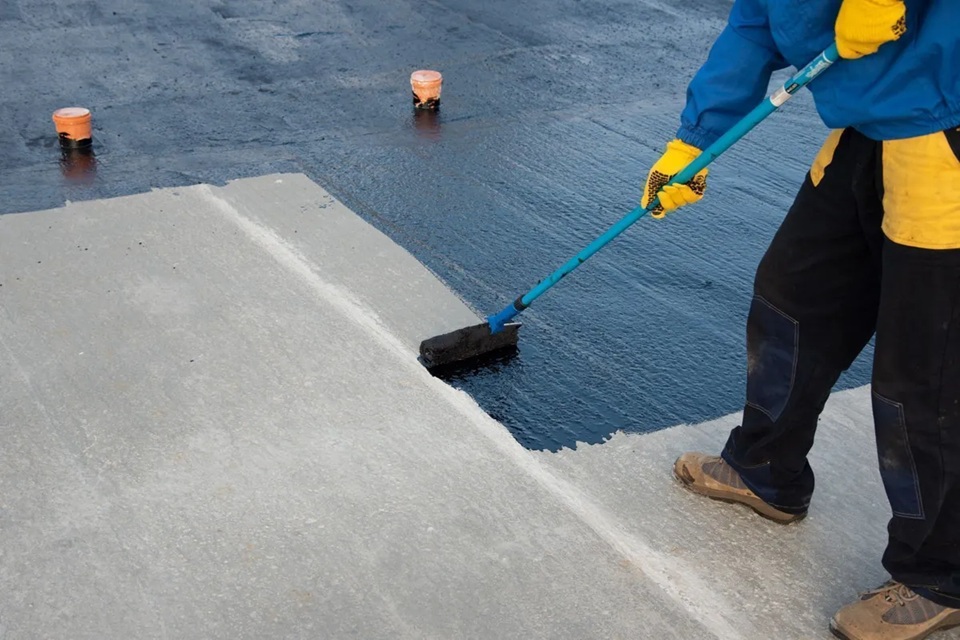
Liquid membranes are polymer-based coatings applied by brush, roller, or spray. Once cured, they form a seamless, flexible barrier that can bridge hairline cracks. Polyurethane-based liquid membranes are especially popular among moisture protection experts working on roof decks, balconies, and planter boxes in Singapore.
Advantages of liquid membranes include:
- Seamless coverage with no joints or overlaps
- Flexibility to accommodate minor structural movement
- Suitability for irregular surfaces and complex details
- Available in various thicknesses to suit different exposure levels
The quality of application matters enormously. Uneven thickness, insufficient curing time, or poor surface preparation will compromise the entire system. This is where the expertise of your contractor becomes critical.
Sheet Membrane Systems
Sheet membranes are pre-manufactured waterproofing layers – typically bituminous, PVC, or TPO – that are laid across surfaces and sealed at joints. They are commonly used on flat roofs, basement slabs, and retaining walls.
Mr Lim Kah Seng, a building surveyor with over twenty years of experience in Singapore, explains the appeal. “Sheet membranes give you a consistent, factory-controlled thickness,” he notes. “With liquid systems, you are dependent on the applicator maintaining even coverage. Sheets remove that variable, though the joints require careful attention.”
The main types include:
- Torch-on bituminous membranes – Heated and bonded to the substrate using a gas torch. Widely used for flat roof waterproofing.
- Self-adhesive membranes – Feature a peel-and-stick backing, reducing fire risk during installation.
- PVC and TPO sheets – Lightweight, UV-resistant, and commonly used for exposed roof applications.
Injection Waterproofing
When water enters through cracks in concrete, injection waterproofing offers a targeted solution. This method involves drilling into the crack and injecting either polyurethane or epoxy resin under pressure. The injected material fills the void, seals the pathway, and prevents further water ingress.
Polyurethane injection is flexible and expands on contact with water, making it ideal for active leaks. Epoxy injection, by contrast, restores structural strength and is better suited for dormant cracks. Experienced waterproofing contractors will select the appropriate resin based on the crack condition and whether structural bonding is required.
Crystalline Waterproofing
Crystalline technology represents a different philosophy altogether. Rather than forming a surface barrier, crystalline compounds penetrate into the concrete and react with moisture and free lime to form insoluble crystals within the pore structure. These crystals block the capillary pathways that water would otherwise travel through.
This approach offers several distinct benefits:
- The concrete itself becomes the waterproofing barrier
- The system is self-healing – new crystals form if minor cracking occurs
- No surface membrane to damage or maintain
- Effective from either the positive or negative side of the structure
Crystalline waterproofing is particularly useful for basement walls, water-retaining structures, and areas where access for future membrane maintenance is limited.
Choosing the Right Solution for Your Building
The selection process should always begin with a professional assessment. Factors that influence the choice of system include:
- Location of the leak – Roof, bathroom, basement, or external wall
- Nature of the water source – Rainwater, groundwater, or internal plumbing
- Structural movement – Whether the building element is subject to thermal expansion or settlement
- Access for maintenance – Whether the waterproofed area can be reached for future inspection
- Budget and longevity expectations – Some systems cost more initially but last significantly longer
A damp proofing contractor who recommends the same solution for every problem is not one you should trust. Each building presents unique conditions, and the waterproofing strategy should reflect that complexity.
The Craftsmanship Behind the System
Waterproofing, done well, is invisible work. The membranes lie hidden beneath tiles, screed, and cladding. The injections disappear into the concrete. Yet the consequences of poor workmanship are anything but invisible – stained ceilings, blistered paint, corroded reinforcement, and the persistent musty odour of trapped moisture.
The difference between a waterproofing system that lasts three years and one that lasts thirty often comes down to preparation, material selection, and application discipline. For building owners seeking durable results, engaging qualified waterproofing contractors who understand and can explain these common solutions is an essential first step.
