

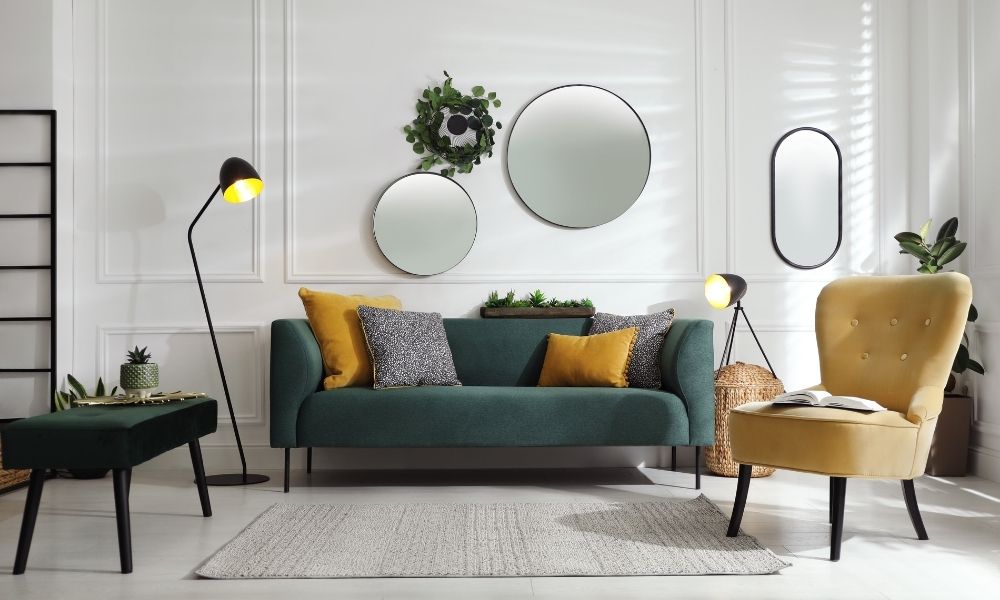
Furniture upholstery exists at the intersection of memory and renewal, a craft that understands how objects absorb the stories of our lives and yet can be transformed, layer by layer, into something that carries forward whilst letting go of what no longer serves. In Singapore’s dense urban fabric, where homes are measured in careful square metres and each piece of furniture must justify its occupation of space, the decision to restore rather than replace becomes a meditation on value itself. What makes something worth saving? When does wear become character, and when does it simply become decay? These questions reveal themselves to be profoundly complex when one sits before a beloved chair, its fabric worn thin by years of use, and must decide its fate.
The Architecture of Comfort
The human body, that exquisite instrument of sensation and complaint, demands specific conditions for comfort. We are soft tissue arranged around rigid scaffolding, and furniture upholstery must mirror this architecture to provide proper support. The spine curves in precise ways, requiring lumbar support at specific points. The legs, when seated, exert pressure on the underside of thighs, necessitating cushioning that distributes weight without impeding circulation.
Consider the layered construction beneath fabric surfaces:
- High-density foam forms primary support structure, bearing loads repeatedly without permanent deformation
- Softer foam above cradles the body’s contours whilst firmer base maintains skeletal alignment
- Dacron batting wraps these layers, creating smooth transitions and preventing tactile sensation of foam cells
- Each layer serves specific physiological requirements, though entirely invisible in the finished piece
The Language of Fabrics
Textiles speak in their own vocabulary, one learned through touch as much as sight. A hand drawn across velvet moves through pile that catches light differently in each direction, creating depth and richness. Linen whispers of summer and breathability, its slight irregularity a signature of natural fibres. Leather develops patina through use, darkening where hands have gripped, softening where bodies have rested, becoming a map of interaction between human and object.
In Singapore’s climate, where humidity hovers persistently at levels that encourage microbial growth, fabric selection takes on medical overtones. Mould spores, ever present in tropical air, colonise porous materials enthusiastically given sufficient moisture. A competent practitioner of furniture upholstery must therefore consider not merely aesthetics but epidemiology.
The practical considerations include:
- Moisture-wicking properties that prevent perspiration accumulation
- Antimicrobial treatments that inhibit bacterial and fungal growth
- Breathability that allows air circulation rather than trapping heat
- Cleanability that permits removal of organic matter before decomposition
- Durability measured in double rubs, quantifying resistance to abrasion
The Practitioner’s Hands
Watch someone skilled at furniture upholstery work and you observe centuries of accumulated knowledge channelled through individual hands. The way fabric is pulled, achieving even tension without overstretching. The angle at which a staple gun is held, ensuring penetration without splitting wood. The judgment about where to place seams, where to make relief cuts, how to navigate corners and curves. This knowledge, like surgical technique, cannot be fully conveyed through written instruction but must be absorbed through practice.
The restoration process follows a kind of surgical protocol: • Diagnosis: what can be saved, what must be replaced, where has structural integrity been compromised • Disassembly: exposing the anatomy beneath • Frame repair: the skeleton that determines whether restoration makes sense • Reconstruction of support systems • Application of new fabric that will meet the world whilst protecting vulnerable structures within
Economics and Sentiment
In the calculus of replacement versus restoration, pure economics rarely tells the complete story. A new sofa might cost three thousand dollars. Professional furniture upholstery might require fifteen hundred. The arithmetic suggests restoration as clearly advantageous. Yet this analysis omits the intangible variables: the chair inherited from grandparents, carrying associations that cannot be purchased. The sofa that witnessed a child’s first steps, absorbed family movie nights, hosted countless conversations. These objects have become archives of experience, and their destruction, even when economically logical, feels like a small death.
Singapore’s evolving relationship with furniture upholstery reflects broader cultural shifts:
- The nation-building generation understood scarcity intimately, repairing as automatic response to wear
- Their children and grandchildren, raised in prosperity, initially embraced disposability
- Younger Singaporeans now rediscover restoration’s wisdom, facing climate crisis and resource constraints
- This represents not nostalgia but adaptation, recognising that indefinite growth on a finite planet requires different approaches
The Transformation
There exists a peculiar satisfaction in furniture upholstery’s completion, seeing a piece that appeared destined for disposal transformed into something that might serve another decade or two. The frame, proven sound through years of use, continues its function. New fabric, carefully selected, provides fresh appeal whilst maintaining the object’s essential character. The craft has performed its alchemy, converting age into patina, wear into story, endings into renewals.
This capacity for transformation, this refusal to accept decay as final, perhaps explains furniture upholstery’s enduring relevance. We live in mortal bodies that cannot be similarly renewed, and so we project onto our objects this desire for continuity, for the defeat of entropy, for the possibility that with sufficient skill and attention, what is worn might be made whole again. The craft answers this need with needles and thread, foam and fabric, hands that know their work. In Singapore’s humid embrace, where decay works constantly, furniture upholstery stands as quiet resistance, insisting that with care, things last.
