

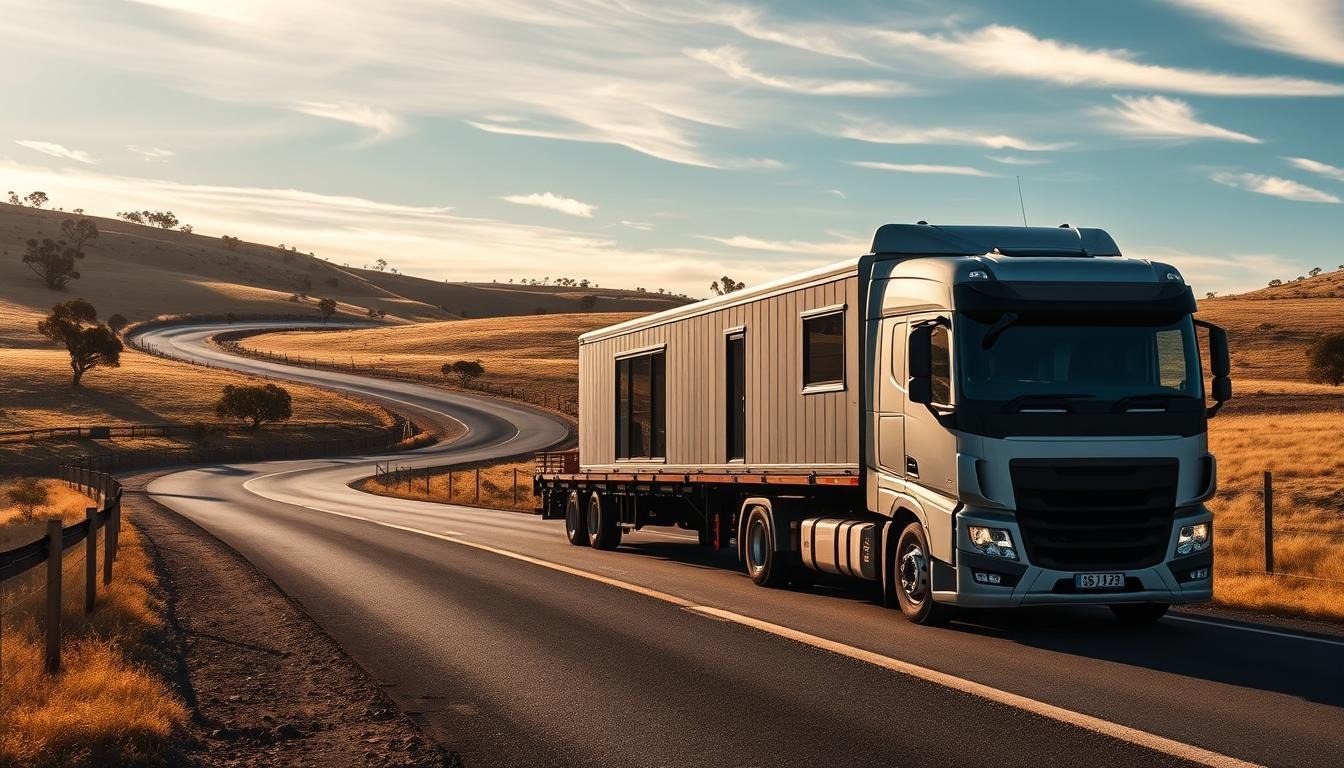
Sarah Mitchell watched a big truck come down a winding road in regional Victoria. It was carrying two parts of a modular home. This was a big change in how homes are built in Australia.
Modular home delivery is changing the game for Australian homeowners. It offers fast and affordable housing solutions. This method is making building homes easier and faster.
Getting a modular home from the factory to your site is a complex task. It involves logistics, engineering, and planning. Knowing how it works can help buyers understand this new way of building homes.
Key Takeaways
- Modular home delivery represents a cutting-edge construction approach
- Prefab house transport requires specialised logistics and planning
- Transport methods can significantly reduce overall building timeframes
- Site preparation is key to a successful modular home installation
- Professional coordination ensures a smooth delivery and placement
Understanding Modular Home Transportation and Delivery Basics
Moving a manufactured home needs special skills and careful planning. Mobile home moving services are key to safe and efficient setup across Australia’s varied landscape.
Transporting modular homes is a complex task that requires expert precision. Professionals face many challenges in moving these large structures from the factory to the site.
Specialised Transport Vehicles and Equipment
For successful installation, specific transport equipment is needed:
- Extendable flatbed trailers for oversized loads
- Hydraulic trailers with adjustable width and height
- Pilot vehicles for safely guiding large units
- Special trucks with advanced suspension systems
Route Planning and Legal Considerations
Mobile home services must plan routes carefully, considering:
- Clearances from overhead power lines
- Road width restrictions
- Bridge weight limits
- Local council permits
Delivery Timeline Expectations
Setting up a relocatable house involves several stages. The transport time can be 1-3 days, depending on distance and complexity.
Delivery times are influenced by distance, road conditions, weather, and permits. Professional teams work hard to avoid delays and ensure smooth transport.
Preparing Your Site
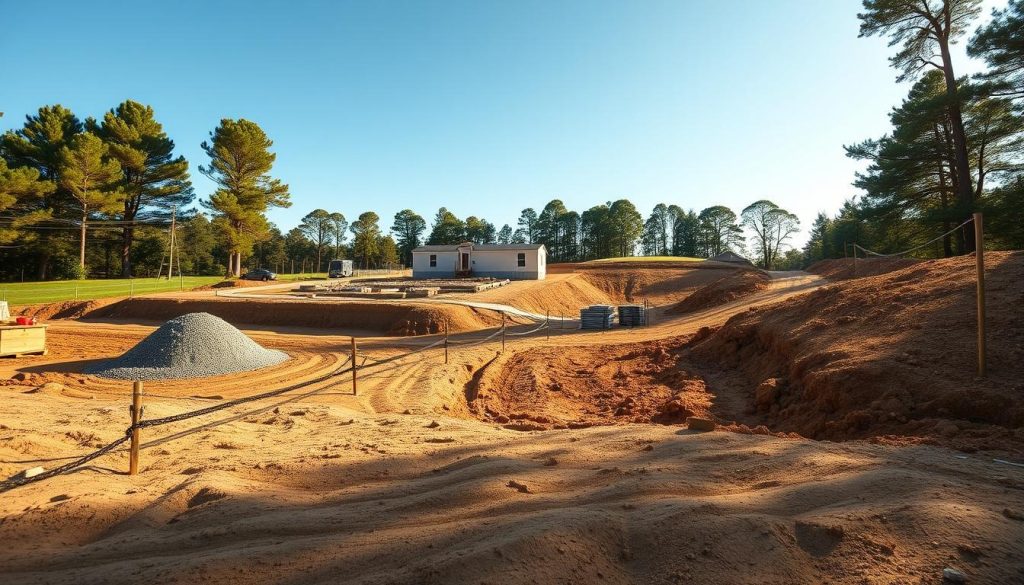
Getting your site ready for a transportable home is key. It’s important to know that good groundwork is essential. It helps keep costs down and makes the installation smoother.
Before the home arrives, there are a few important steps:
- Clear the area of debris, plants, and any obstacles
- Make sure big trucks can get in easily
- Prepare a solid and even base
- Check local rules and get the right permits
It’s vital to make sure the site is easy to get to. Big trucks and heavy gear need wide, stable paths. Check the entry points, cut down low branches, and clear a path for the big trucks.
“Proper site preparation can reduce delivery complications and additional expenses by up to 30%.” – Australian Modular Housing Association
Work with local utility companies to mark and protect underground services. This stops damage during preparation and saves on costs.
Getting a professional to check the site can save you time and money. A surveyor or site expert can tell you what your property needs.
- Check the soil
- Look at drainage needs
- Confirm the foundation type
- Review local building rules
Spending time on good site preparation makes the delivery process easier. It also helps avoid any big problems.
The Step-by-Step Process
Getting a modular home delivered needs careful planning and precision. The time it takes to deliver a factory-built home depends on several key stages. These stages ensure your home arrives safely and on time.
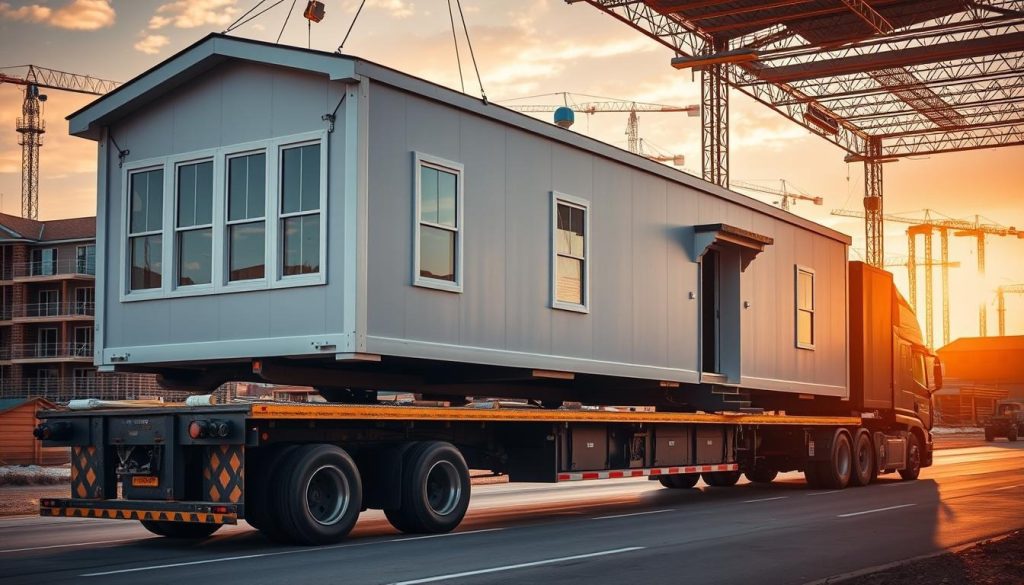
Shipping a modular home involves complex logistics that need professional skills. Clients must know each step of the journey from the factory to their home.
Pre-Delivery Inspections
Before leaving the factory, each module gets a thorough check. Skilled inspectors look at:
- Structural integrity
- Electrical systems
- Plumbing connections
- Interior and exterior finishes
Transportation Safety Measures
Keeping modules safe during transport is key. Special vehicles use:
- Reinforced securing straps
- Protective coverings
- Cushioned transport platforms
- GPS tracking systems
On-Site Placement Procedures
The final step is placing the modules on your site. Professional teams use mobile cranes to:
- Align modules with the foundation
- Connect structural elements
- Ensure level placement
- Seal inter-module connections
Precision is key in placing modular homes.
Cost Factors in Factory-Built Home Transportation
Understanding the costs of moving a factory-built home in Australia can be tricky. The price you pay for moving a modular home depends on many important things. These factors can greatly affect your budget.
Here are the main things that decide the cost of moving a modular home:
- Transport distance across Australian terrain
- Module size and weight specifications
- Route complexity and possible road restrictions
- Seasonal transportation challenges
The distance from the factory to your home is a big factor. Moving a home over long distances in Australia costs more. The transport vehicles used must handle tough terrains and keep the modules safe.
There are also extra costs you might not expect:
- Escort vehicle needs
- Special transport permits
- Site preparation and storage fees
- Insurance for transport risks
Planning ahead and knowing these costs can help you budget for your modular home move. Talking to experts in modular home transport can give you a clear idea of what to expect.
Smart budgeting starts with understanding transport logistics well.
Common Challenges and Solutions
Transporting prefab houses and installing manufactured homes comes with its own set of challenges. It needs careful planning and the right expertise. To ensure a smooth delivery, it’s important to anticipate and solve problems early on.
Dealing with the complexities of moving modular homes requires smart problem-solving and proactive management. Both homeowners and construction experts need to be ready for any disruptions during the delivery process.
Overcoming Weather-Related Challenges
Severe weather can greatly affect prefab house transport in Australia. Transporters must consider several key factors:
- Monitoring seasonal weather patterns
- Implementing flexible scheduling
- Using protective coverings for modular components
- Selecting appropriate transportation windows
Managing Site Access Restrictions
Installing manufactured homes often faces physical barriers that need creative solutions. Common issues include:
- Narrow rural roads
- Low-hanging power lines
- Challenging terrain
- Limited property access
Coordinating with Local Authorities
For a successful modular home delivery, it’s vital to communicate well with local councils and regulatory bodies. Effective strategies include:
- Obtaining necessary transportation permits
- Conducting pre-delivery site assessments
- Engaging early with local infrastructure teams
- Ensuring compliance with regional transportation regulations
Professional planning and expert coordination can turn challenges into successful modular home deliveries across Australian landscapes.
Conclusion
In Australia, mobile home moving services have changed how we build homes. They offer great flexibility and speed in setting up homes that can be moved.
You need to get your site ready and understand how to move your home. It’s important to check local rules, prepare your site well, and team up with experts in moving homes.
Modular homes are a smart choice in Australia’s changing housing market. They are affordable, flexible, and easy to set up. Thanks to mobile home services, getting your dream home is easier than ever, without the usual building hassles.
Getting a new modular home is an exciting journey. Knowing how to set up a relocatable home and working with reliable experts make it possible. This way, you can create the home you’ve always wanted.
