

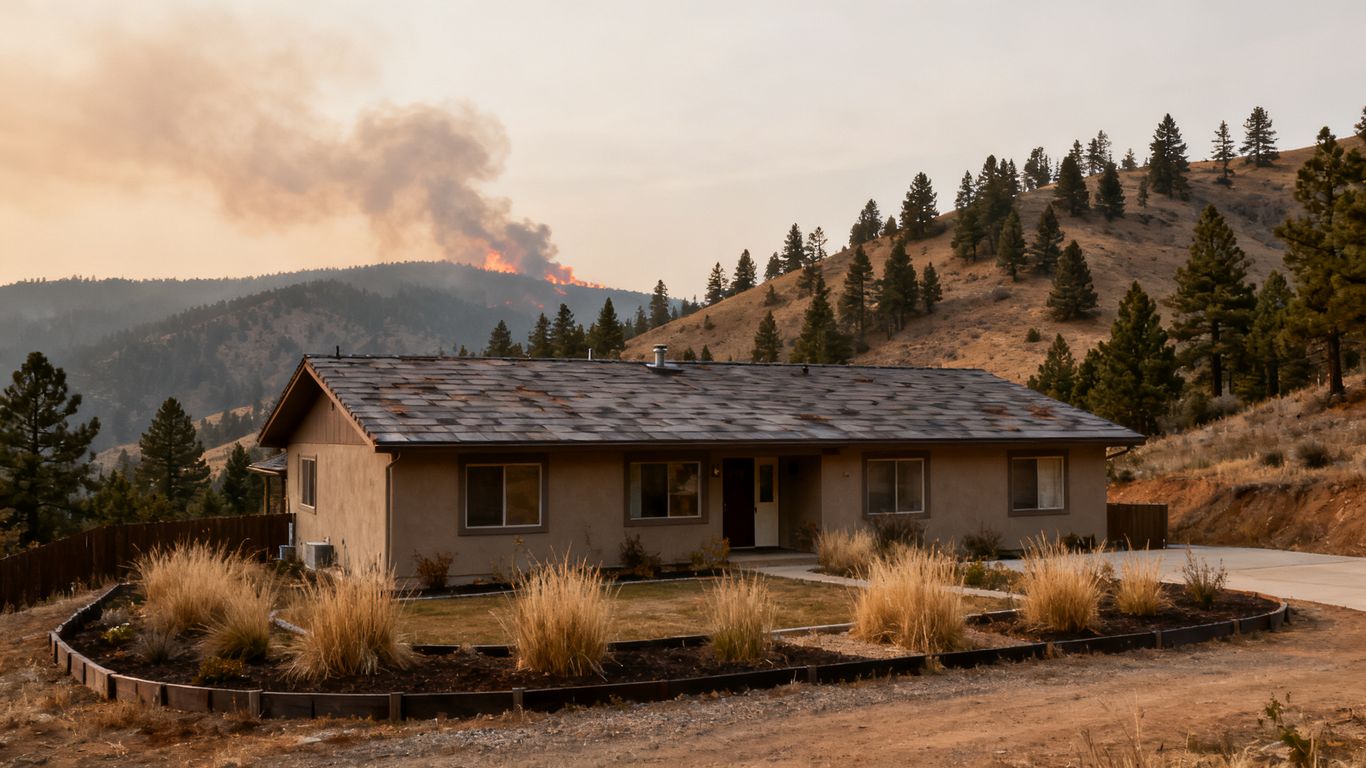
Wildfire exposure can influence a home’s price, but it rarely determines value on its own. Buyers may weigh the chance of damage alongside insurance availability, repair costs, local amenities, and the property’s condition. The effect can differ substantially from one neighborhood, or even one parcel, to another.
Why homes in high-risk areas may sell for less
A home may attract a smaller pool of buyers if wildfire concerns bring higher ownership costs or make insurance harder to obtain. Some buyers also account for possible mitigation work, uncertainty about future coverage, and the disruption that can follow a nearby fire. Those concerns can put downward pressure on offers, though they do not guarantee that a particular home will sell at a discount.
How buyer demand and comparable sales affect pricing
Pricing reflects what buyers are willing and able to pay, as well as what similar properties have recently sold for. A useful comparison considers more than square footage and finishes: location, access, construction, insurance options, and recent fire activity can all distinguish one sale from another. If buyers view those properties differently, older or less comparable sales may provide a poor guide to current value.
Why wildfire exposure can influence a neighborhood or region
Repeated fire activity or broader concern about local exposure may affect demand beyond the parcels closest to a burn area. Buyers may reconsider a location if they anticipate limited evacuation routes, disrupted services, or rising insurance costs across the community. At the same time, neighborhood amenities, employment, and access to schools or transport can continue to support demand, so regional effects are not uniform.
When limited housing supply may offset wildfire-related discounts
In a market with few homes for sale, competition can remain strong even when buyers are concerned about wildfire exposure. A well-maintained property with practical mitigation and accessible insurance options may be especially appealing compared with nearby alternatives. Scarcity can therefore soften a discount, but it does not remove the need to evaluate risk and long-term costs.
How to assess a property’s wildfire exposure
A property’s wildfire exposure is best considered through several sources of information rather than a single rating. Maps, on-the-ground conditions, fire history, and advice from local professionals can each reveal different parts of the picture. A careful review helps buyers distinguish broad regional risk from features that are specific to the home.
What wildfire risk maps can and cannot tell you
Public risk maps can help locate a property within a broader hazard area and identify patterns such as nearby vegetation or terrain. They are screening tools, not a prediction of whether a particular home will burn, and different maps may use different data or methods. A map also may not reflect recent changes in landscaping, construction, or local fire conditions, so its rating should be paired with a property-level review.
How vegetation, terrain, and access affect property-level risk
The immediate setting can shape how readily fire may approach a structure and how responders could reach it. Slopes, dry vegetation, nearby trees, building materials, and the number of available access routes are among the details worth examining. A site visit can make those conditions easier to understand; a practical review might include:
- The type, density, and distance of vegetation around the home
- Roof, siding, vents, windows, and other exterior features
- The slope and layout of the parcel and nearby land
- Road access, turnaround space, and possible evacuation routes
These observations do not produce a definitive forecast, but they can help identify questions for a qualified local professional. The same features may also matter when discussing mitigation or insurance with an agent.
Why past fires and changing climate conditions matter
A record of nearby fires can provide context about local exposure, but past events do not establish what will happen next. Conditions can change as vegetation grows, land is developed, and weather patterns shift. Buyers should consider both the property’s history and the possibility that future conditions may differ from those reflected in older records or maps.
What to ask local fire officials and insurance professionals
Local fire officials may be able to explain evacuation planning, community preparedness, and the resources available in the area. An insurance professional can clarify whether a policy is available for the specific address and which property features may affect underwriting. Buyers can ask what information the insurer needs, whether mitigation documentation is useful, and which policy terms deserve close review.
How wildfire risk affects home insurance
Wildfire exposure can affect whether a home is eligible for coverage, what a policy costs, and which terms are offered. Insurers assess risk differently, and decisions may reflect both broad location data and characteristics of the individual property. For homeowners, insurance continuity matters: a premium is only one part of understanding whether coverage can be maintained and what protection it provides.
Why premiums can rise in fire-prone areas
Insurers set rates based on their assessment of potential losses and the costs associated with providing coverage. Where wildfire exposure is considered elevated, that assessment may contribute to higher premiums, tighter terms, or fewer available options. Rates also reflect policy limits, deductibles, and other underwriting considerations, so a change in price does not necessarily point to a single cause.
How insurers evaluate location, construction, and mitigation
An insurer may consider the home’s location as well as its construction and surrounding conditions. Details such as roof materials, exterior features, nearby vegetation, and access may be relevant, although the information requested and its effect on eligibility can vary. Owners can ask whether documented mitigation is considered and what evidence the insurer needs before making changes to a policy decision.
What nonrenewal or limited coverage can mean for homeowners
A nonrenewal notice means a homeowner should promptly review the stated deadline and begin exploring available coverage, rather than waiting until the policy expires. Limited coverage may leave some risks, property features, or costs outside the protection a homeowner expects. Reviewing the policy documents and asking an insurance professional to explain the terms can help clarify what needs attention before a gap arises.
Why quotes and eligibility can vary between insurers
Insurers may use different underwriting criteria, risk information, and approaches to evaluating a property. As a result, one company’s decision or quote does not establish what another will offer. Homeowners can provide consistent, accurate details when seeking quotes and compare the limits, exclusions, deductibles, and conditions, not just the price.
What wildfire home insurance covers and where gaps may remain
Wildfire damage is generally addressed through the fire provisions of a homeowners policy, but the exact protection depends on the contract and applicable state rules. The policy’s declarations and full wording matter more than a general description of coverage. A policy coverage overview can help frame questions about property, belongings, and living expenses, while the insurer or agent can explain the terms of a specific policy.
How standard homeowners policies generally handle wildfire damage
Many standard homeowners policies include coverage for fire damage to the dwelling and personal property, subject to the policy’s terms. Coverage may also apply to certain attached structures or additional living expenses if a covered loss makes the home uninhabitable. The scope and limits differ by policy, so homeowners should confirm how their own contract treats each category.
Which exclusions, limits, and deductibles to review
Policyholders should check the declarations page and wording for coverage limits, exclusions, and the amount they would pay before coverage applies. Particular attention can go to dwelling replacement limits, personal property caps, separate deductibles, and any requirements that affect a claim. Homeowners who are unsure about a term can ask the insurer to explain it in writing before relying on an assumption.
How smoke, evacuation, and additional living expenses may be treated
Smoke damage may be handled differently depending on the policy language and the facts of a loss. Additional living expense coverage may help with certain extra costs when a covered event makes the residence uninhabitable, but it is usually subject to limits and conditions. An evacuation by itself does not necessarily establish what the policy will pay, so homeowners should ask how their contract addresses evacuation orders and temporary relocation.
When state-backed plans or surplus-line coverage may be options
If conventional coverage is difficult to obtain, homeowners can ask a licensed insurance professional or state insurance department about options available in their location. Some areas have state-backed plans or policies placed through surplus-line insurers, but availability, terms, and protections vary. Such coverage should be reviewed carefully to understand its limits and how it fits with any other policy.
How mitigation may affect insurance and property value
Mitigation can make a property less vulnerable to some wildfire conditions, though it cannot eliminate risk. Improvements may be considered by insurers or buyers, but their effect on premiums, eligibility, or resale value is not guaranteed. The most useful approach is to identify practical work, verify local recommendations, and keep clear records of what has been completed.
Which home-hardening improvements can reduce vulnerability
Home-hardening work focuses on features that may help a structure resist embers and heat. Depending on the home and local guidance, owners might review roofing, vents, exterior materials, windows, and places where leaves or debris collect. A qualified contractor or local fire professional can help determine which improvements are appropriate, since the best choices depend on the building and its setting.
How defensible space and community measures contribute to risk reduction
Managing vegetation near a home can reduce nearby combustible material and support access for emergency response. The appropriate work depends on local rules, terrain, and the surrounding ecosystem; indiscriminate clearing is not a substitute for informed maintenance. Community-level measures, such as coordinated preparedness and accessible routes, can also contribute to resilience, although no single measure guarantees protection.
When mitigation may help with premiums or insurance eligibility
Some insurers may consider specific mitigation measures when evaluating a property, while others may give them limited weight or require particular documentation. Homeowners should ask directly which improvements, if any, could affect eligibility or pricing and whether an inspection is needed. Mitigation should be understood first as a risk-reduction effort, not as a promise of lower premiums or continued coverage.
How to document improvements for insurers and prospective buyers
Clear records make it easier to explain work that may not be obvious during a brief viewing. Owners can keep dated photographs, invoices, permits where applicable, and contractor descriptions together with any inspection reports. When shared with an insurer or prospective buyer, this documentation can support a more specific discussion of the home’s condition and mitigation history.
What buyers and sellers should consider before a transaction
Wildfire exposure can affect a transaction well before closing, especially when coverage is difficult to arrange or costly to maintain. Buyers and sellers benefit from treating insurance, property condition, and disclosures as related parts of due diligence. Early questions give both parties more time to understand practical costs and avoid relying on assumptions.
How to verify insurance availability and cost before making an offer
A buyer can ask an insurance professional to assess the specific address before committing to a purchase, since a general estimate may not reflect underwriting for that property. The review should include whether coverage is available, the likely premium, proposed limits, deductibles, and any conditions. If options are limited, the buyer can investigate alternatives and factor the results into the purchase decision.
What to review in disclosures, inspections, and insurance quotes
Buyers should read seller disclosures alongside inspection findings, available fire-history information, and written insurance quotes. They can ask about known damage, repairs, mitigation work, previous coverage changes, and any unresolved recommendations. Oregon homeowners and buyers may also consult wildfire recovery guidance for general information on reviewing policy terms and keeping useful records; state-specific requirements should be checked locally.
How wildfire risk can affect financing and ongoing ownership costs
A lender may require evidence of property insurance as part of financing, so difficulty obtaining coverage can complicate a purchase timeline. Even when a loan proceeds, premiums, deductibles, mitigation work, and possible temporary relocation costs can shape the ongoing budget. Buyers should consider those recurring and potential expenses alongside the mortgage payment and purchase price.
How sellers can present mitigation work and insurance history
Sellers can make the transaction clearer by assembling records of completed improvements, permits, inspections, and maintenance. They should describe insurance history accurately and provide relevant documents through the transaction process, rather than implying that a prior policy guarantees future availability. Complete information gives buyers a better basis for evaluating the home and obtaining their own coverage.
