

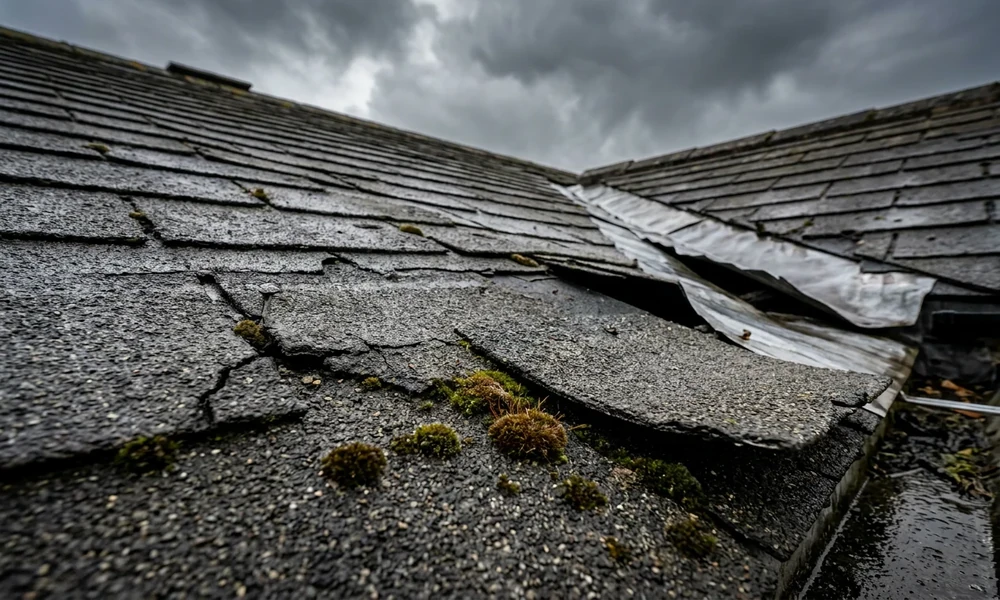
Picture a single raindrop landing near the ridge of a two-story house in Carmel during a heavy spring storm. Over the next few seconds it will slide across shingles, skim past metal flashing, drop into a gutter, race down a downspout and finally hit the soil beside the foundation. Each of those surfaces was probably installed by a different crew, at a different time, with different priorities. And that is exactly why so many leaks in Indiana homes have nothing to do with a bad shingle or a cracked siding panel. They happen where one system hands water off to the next.
Homeowners around Indianapolis who want those transitions treated as one connected job often turn to Harber Exteriors, a family business based in Cicero whose owner, Cole, is a veteran. The crew handles roofing, siding and gutters under one roof, which matters more than it sounds, since nobody has to guess what the last contractor did at the edges. They also run free property inspections and work insurance claims directly with carriers when storm damage is involved.
Central Indiana gets around forty inches of precipitation in a typical year, plus snow that melts and refreezes several times each winter. That water does not care which trade owns which surface. So the useful way to look at a house is the way the raindrop does, from top to bottom.
Shingles Are Only the First Shift
A roof’s job is not to absorb rain but to keep it moving downhill. Shingles overlap so each course sheds water onto the one below, and the underlayment beneath them acts as a backup when wind drives rain sideways. At the eaves, a strip of drip edge keeps water from curling back under the shingles and soaking the fascia board.
This is the first handoff, and it gets botched more than people think. When the drip edge sits behind the gutter instead of over it, water can run down the back of the gutter and straight into the fascia. Over a few seasons that board turns soft, the gutter hangers lose their grip and the whole run starts to sag. In Indiana winters, ice dams make this worse. Snow melts over a warm attic, refreezes at the colder eave and backs water up under the shingles, so a properly lapped ice barrier membrane along the lower edge of the roof is not optional here.
Where a Roof Runs Into a Wall
Some of the most stubborn leaks start at a spot most people never look at, where a lower roof meets the side wall of a taller section. Think of a garage roof tucked against a two-story house, or a porch roof butting into the main wall.
Along that line, roofers weave small pieces of step flashing into each course of shingles, with one leg on the roof and the other running a few inches up the wall. The housewrap and siding then lap over the top of that flashing, so any water that sneaks behind the siding gets steered back onto the roof. Siding is also supposed to stop a couple of inches above the shingles rather than sit in the water.
At the very bottom of that intersection belongs a small, oddly shaped piece called a kickout flashing. It turns water away from the wall and into the gutter. Without it, every storm pours a concentrated stream down the siding right where the roof ends, and that water often finds its way behind the cladding into the sheathing. The giveaway from the outside is a dark streak or stain on the wall just below the roof edge, sometimes paired with soft drywall or peeling paint on the inside of that wall.
Siding Works Like a Raincoat Over a Second Raincoat
Vinyl and fiber cement both shed most rain, but neither one is meant to be watertight on its own. The real moisture barrier is the housewrap or building paper underneath. Siding is the outer shell that takes the beating, while the layer behind it catches whatever gets past.
That design only works if water that does slip behind the panels has a way out. Vinyl is hung loosely so it can expand and contract through Indiana’s swings between humid summers and subzero snaps, and it has small weep openings along the bottom edge for drainage. Fiber cement needs flashing behind its butt joints and enough clearance from the ground and roof surfaces that it never sits in standing water.
Windows and doors are the weak points in the middle of the wall. J-channel and head flashing above a window should push water outward, not funnel it into the opening. Caulk alone is a short-term patch, since it shrinks and cracks after a few freeze and thaw cycles.
Taking a Walk During the Next Downpour
The best inspection a homeowner can do costs nothing and happens with an umbrella. Next time it rains hard, step outside and watch the house work.
- Look along the gutters for water spilling over the front edge, which points to clogs, poor pitch or gutters too small for the roof area above them.
- Check every spot where a lower roof meets a wall and see whether water lands in the gutter or sheets down the siding.
- Watch the seams of the gutter runs and the corners for drips that suggest failed sealant or separated sections.
- Follow each downspout to its end and note whether water pools near the foundation or flows away.
- Glance at the lowest course of siding for splashback marks, mud or green growth.
Ten minutes in the rain tells you more than an hour on a sunny afternoon, because you are seeing the actual path the water takes rather than guessing.
Gutters Are a Delivery Service, Not Storage
Gutters collect a surprising volume of water. A modest roof can shed hundreds of gallons in a single inch of rain, and all of it gets funneled toward a handful of downspouts. To keep that water moving, gutters need a slight, steady slope toward each outlet, and enough downspouts so no single corner gets overwhelmed.
Leaves from maples and oaks, along with helicopter seeds in spring, clog outlets fast in older Indianapolis neighborhoods. Once a gutter backs up, water overflows directly onto the ground beside the foundation, which defeats the purpose of having gutters at all. Sagging sections, peeling paint on the fascia below, and mildew streaks on the siding under a gutter run all hint that something is off well before the basement gets wet.
The Last Few Feet Decide Whether the Basement Stays Dry
The downspout is the final handoff, and it is often the most neglected. Water dumped right at the base of a wall soaks into the backfill and presses against the foundation. Much of central Indiana sits on clay-heavy glacial soil that drains slowly, so that water lingers instead of disappearing.
Extensions that carry water several feet out, splash blocks that actually point away from the house, and soil graded to slope downhill from the foundation all help. Some homeowners go further and send downspouts toward a rain garden or rain barrel. The EPA’s Soak Up the Rain program explains how redirecting roof runoff onto lawns and planted areas lets it soak in slowly rather than rushing toward basements or storm drains.
Seeing the House as One System
When a basement floods or a wall stain appears, the instinct is to blame whatever part is closest to the damage. Yet the cause is frequently a story told across several surfaces, perhaps a missing kickout feeding water behind siding, or a clogged gutter overflowing onto a downspout that already empties too close to the wall. Fixing one piece in isolation can simply move the problem a few feet.
That is why it pays to think in terms of handoffs whenever you replace a roof, reside a wall or upgrade gutters. Ask how the new work will tie into what stays, who is responsible for the flashing at each joint, and where the water will end up. A house that passes water cleanly from ridge to yard tends to stay dry, quiet and solid for decades, no matter how hard the Indiana sky decides to rain.
