

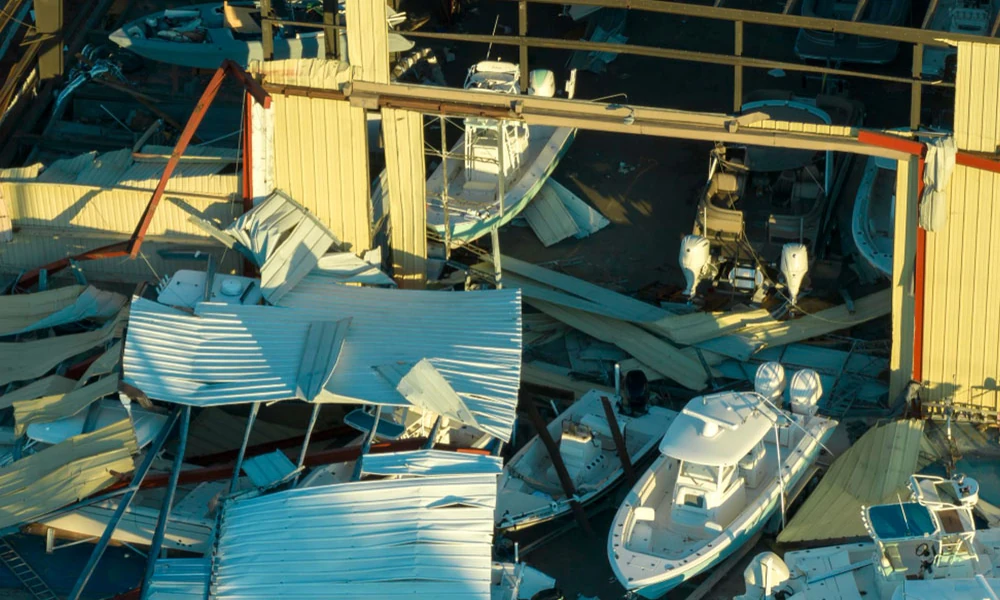
Floodwater from heavy rain and water pushed in by the Gulf can look the same in a garage. They do very different things to wiring. Fresh water mostly leaves silt and moisture behind. Seawater leaves salt, and salt keeps causing damage after the water drains. It pulls humidity from the air, stays conductive, and corrodes copper, aluminum and steel for weeks. That is why a panel or outlet that looks fine the morning after a surge can start tripping, buzzing or running hot a month later.
Most of this damage is hidden inside boxes, conduit and sealed enclosures. The National Electrical Manufacturers Association publishes a guide to evaluating water-damaged electrical equipment. Its general direction is clear: once floodwater reaches them, most residential electrical components should be replaced rather than dried and reused. Saltwater makes that case stronger, because cleaning rarely gets salt out of the tight spaces where contacts and terminals meet.
Coastal homes also keep more electrical gear near the ground than they did twenty years ago. Pool equipment, landscape lighting transformers, standby generators, EV wall connectors and AC disconnects often sit within a few feet of the slab. That puts them right in the surge zone.
For homeowners in Sarasota, Manatee and Charlotte counties, Barrett’s Electrical Solutions handles this kind of work as a family-run Venice electrical contractor. The company has 35 years in the trade and holds state license EC13001523. Its services include hurricane repairs, generator installation, Tesla and EV charger installs, custom outdoor lighting and general service, with free estimates. One call after a surge can cover everything from the main panel to the yard lights.
1. The Main Panel and Its Breakers
A breaker is a small mechanism, with a spring, a trip element and contacts packed into a plastic case. Saltwater gets inside, dries, and leaves crystals on the parts that are supposed to move freely. A breaker in that condition may fail to trip during an overload, which is the one job it exists to do. NEMA’s guidance treats molded case breakers exposed to water as items to replace. Many electricians also replace the panel when the bus bars show green or white residue. Panels mounted low in garages are the usual casualties. During replacement, it’s worth asking about mounting the new panel higher.
2. Outlets, Switches and GFCI Devices
Receptacles and switches are inexpensive, which helps, because nearly every one below the waterline should go. GFCI and AFCI devices need extra attention. They contain circuit boards that salt can bridge. A damaged GFCI may still reset normally and yet fail to trip during a real ground fault, so pressing the test button proves very little after a flood. Plan on replacing every protective device that sat underwater, along with surge protectors, which NEMA also lists for replacement.
3. Branch Wiring Inside the Walls
Whether wire can stay depends on what kind it is. The nonmetallic sheathed cable found in most Florida homes is made for dry locations. Its paper filler and jacket wick water along the run, sometimes well above the visible flood line. Salt carried this way can corrode terminations inside boxes that never got wet from the outside. Conductors rated for wet locations and run in conduit can sometimes be kept after drying and testing, but the boxes and devices on them still need replacing. An insulation resistance test gives a measured answer instead of a guess.
4. Landscape Lighting and Yard Circuits
Outdoor lighting is designed for rain, not for sitting in seawater. Low-voltage transformers usually hang a foot or two above grade, right where surge water peaks, and their timers and photocells fail fast. The bigger hidden problem is the buried splices. Connections that were twisted and taped, rather than sealed in gel-filled connectors, corrode from the inside. The typical sign is fixtures that get dimmer toward the end of the run. A rebuild is a good time to mount transformers higher, use sealed connectors, and replace mechanical timers with wireless controls.
5. AC Disconnects and Pool Equipment
The condenser pad and the pool pad are both low and both crowded with electrical gear. Several components there can trap saltwater inside their enclosures:
- the disconnect beside the AC unit
- the pool subpanel and pump timers
- variable-speed pump drives
- salt chlorinator controls
Pool equipment also ties into the bonding grid around the pool, and corroded bonding connections create shock risk near the water. Have this equipment checked before the pump goes back on, even if it seems to run normally.
6. Generators and Transfer Switches
Standby generators usually sit on raised pads, but surge water doesn’t always stay below pad height. Even if the engine stayed dry, the automatic transfer switch is often mounted lower on an exterior wall and may not have. Its control board and contacts are exactly the parts saltwater destroys. A failed transfer switch can leave a home without backup power. Worse, it can let generator power feed back into utility lines.
Homes relying on portable units in the meantime need just as much care. The Consumer Product Safety Commission’s portable generator safety guidance says to run them outdoors only, at least 20 feet from doors, windows and vents, and never to plug one into a wall outlet to power the house wiring.
7. EV Chargers and the Car Itself
Wall connectors are often mounted at bumper height in garages, which is frequently below the surge line. The charger’s electronics and the circuit feeding it need the same evaluation as any other flooded equipment, including the GFCI breaker serving it.
The car is the bigger concern. After Hurricane Ian, Florida fire officials reported flooded electric vehicles catching fire. Federal safety regulators warned that a lithium-ion battery soaked in saltwater can ignite weeks later, as dried salt bridges the cells. A flooded EV should stay unplugged, be parked away from the house, and be cleared by the manufacturer or a qualified shop before it is charged again. Golf carts and e-bikes with lithium batteries carry the same risk.
Across all seven areas, the order of work matters. Leave flooded circuits off until each one has been evaluated, replace what the evidence calls for, and restore power one circuit at a time.
