

Hiring a licensed and certified outdoor kitchen construction company is an absolute must for your project:
They must carry workers’ compensation and general liability insurance. If they don’t have these insurances, that’s a major red flag, and you should probably stay clear of them.
- It’s doubtful that they’ll have the experience to build an outdoor kitchen that meets your specific needs.
- Unlicensed contractors don’t have any government regulation and are likely to be uninsured and unable to meet your needs.
- Unlicensed contractors tend to close or ignore complaints.
Building a grill island
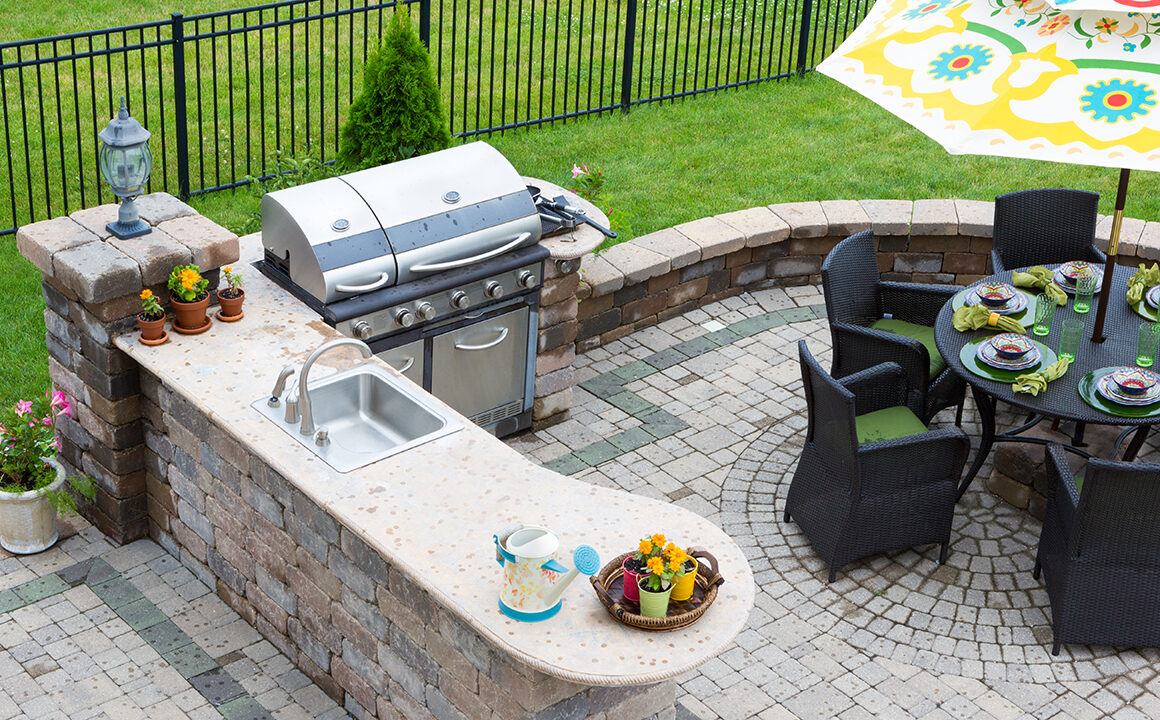
For a DIY project, you can use pressure-treated 2x4s and 3/4-inch plywood. These materials are easier to work with than concrete blocks. You can build the island with three separate boxes, each with a countertop and a storage space below. Attach these boxes using wood screws. Then, slide the appliances in. The grill should be level and flush with the island face. You can also add a built-in bar or cabinet to the grill island.
You can even choose appliances to place inside the island, including a refrigerator, outdoor sink, storage space, and pull-out trash. You can even purchase charcoal grills if you want authentic grilled flavors. You can also opt for pellet grills for convenience. But before you get started, make sure you check the specifications of these appliances. Also, please double-check your measurements to fit perfectly on the island.
Framing options
One of the first decisions an outdoor kitchen contractor will face is what material to use for the frame. The choice of material will determine how quickly the project can be completed, how much it will cost, and how durable it is. While metal studs are often the choice of professional outdoor kitchen contractors, they are also more expensive per square foot than wood. However, metal studs have many advantages, and they are often preferred by people who want a more exquisite outdoor kitchen.
Steel is another material that outdoor kitchen contractors often use. Steel is durable and can withstand high winds and extreme temperatures. Regardless of what outdoor kitchen style you are planning to build, steel can provide a sturdy base for your outdoor kitchen. Steel costs around $67 to $95 per square foot, and it is also an environmentally friendly material. However, if you’d prefer a less expensive option, you may consider installing an insulation jacket on the steel frame to help with heat loss.
Choosing a high-end contractor
Before hiring a contractor, it is vital to meet with each and discuss your needs and desires. You should be able to talk with them about the design options, kitchen equipment, and materials. The contractor should be able to provide an accurate price for the outdoor kitchen. A satellite kitchen contractor should visit your property to assess the location of utility lines, drainage, and other considerations. After determining these issues, you should hire a contractor who provides the best services and the best value.
An outdoor kitchen contractor should have experience building outdoor kitchens. Make sure he is familiar with different types of materials and designs. If you aren’t familiar with any particular brand, ask the contractor to show you their portfolio of completed outdoor kitchens. These are excellent references. You can even ask the homeowners themselves for tips on improvements. The contractor should know how to install the grill properly. The contractor should also be certified and licensed to work in the state in which you live. A licensed contractor will have general liability insurance and workers’ compensation coverage in case of an accident.
Choosing a production builder
While selecting a production builder for outdoor kitchens may be less expensive, it can also limit the amount of customization you have. Because most outdoor kitchens are created in similar styles, production builders use a limited number of layouts and materials. The main difference between these types of builders is the focus on speed and quality. Choosing a custom builder ensures that your outdoor kitchen is one of a kind. The benefits of a custom builder include a higher level of customization and the ability to choose a wider variety of materials and products.
Production builders have the most common approach to outdoor kitchens. They tend to have fewer completed projects than custom builders so they won’t have as much room for customization. They also generally purchase materials in bulk and do not allow you much input. Instead, these builders will dictate what type of outdoor kitchens they can build. As a result, you might want to choose a custom builder if you don’t like the pre-designed floor plans.
