

Property markets have always been influenced by location, but the definition of a “good location” continues to evolve.
For decades, proximity to major employment centres was often the primary factor driving residential demand. Buyers were willing to compromise on housing size, lifestyle amenities, and even affordability if it meant reducing their daily commute.
Today, however, Australians are thinking differently.
While access to employment remains important, buyers are increasingly looking for locations that offer a more balanced lifestyle. They want communities where transport, retail, recreation, education, and housing work together rather than existing as separate pieces of a suburban puzzle.
This shift is changing how suburbs develop and how buyers evaluate long-term property opportunities. Increasingly, areas with strong transport connections and integrated urban planning are attracting attention from both owner-occupiers and investors.
The growing appeal of destinations such as ed square and the broader suburb of Edmondson park demonstrates how infrastructure-led development is helping reshape residential demand across Australia.
The Relationship Between Transport and Property Value
Transport infrastructure has always played a significant role in property markets.
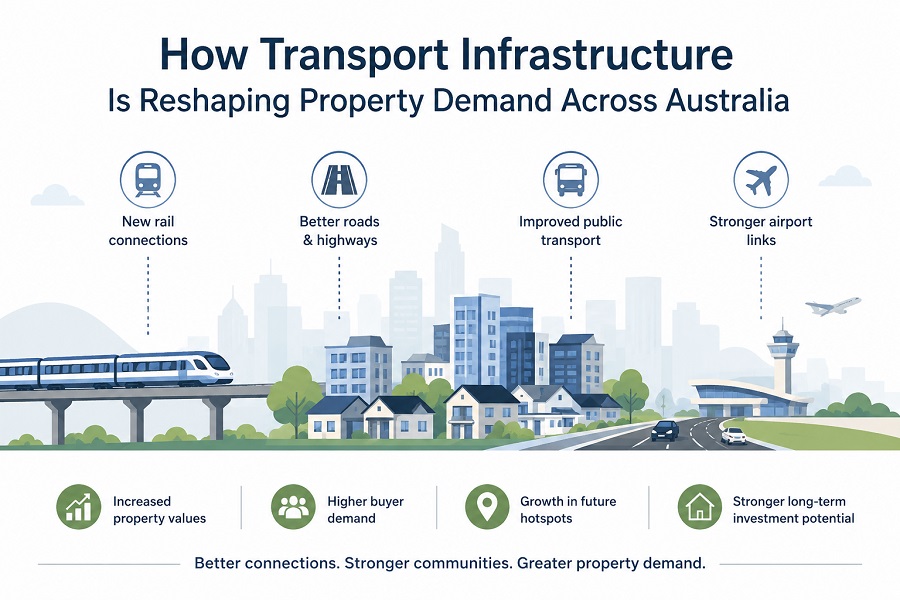
Railway lines, highways, and major road upgrades often influence:
-
Housing demand
-
Population growth
-
Rental activity
-
Commercial investment
-
Long-term capital appreciation
The reason is simple.
Good transport infrastructure reduces the friction of everyday life. It makes it easier for people to access employment, education, shopping, healthcare, and recreation.
When travel becomes easier, suburbs become more attractive.
However, modern buyers are increasingly looking beyond transport alone.
Today, they want transport to be integrated into a broader lifestyle offering rather than functioning as a standalone advantage.
The Rise of Connected Communities
One of the most important trends in Australian urban development is the emergence of connected communities.
Unlike traditional suburban growth models, connected communities are designed around the idea that people should be able to access many essential services close to home.
This includes:
-
Public transport
-
Retail centres
-
Schools
-
Parks
-
Dining precincts
-
Community facilities
-
Healthcare services
Rather than requiring residents to travel long distances for daily needs, these communities aim to create greater convenience and liveability.
This planning philosophy is increasingly influencing buyer preferences across major Australian cities.
Why Buyers Are Looking Beyond the CBD
Historically, many buyers focused heavily on securing property as close to the CBD as possible.
But several factors have shifted this mindset:
-
Rising housing prices in established inner-city suburbs
-
Increased remote and hybrid work
-
Improved transport infrastructure
-
Greater demand for lifestyle-oriented living
-
Expanding suburban amenities
As a result, many households are discovering that they can achieve a better balance between affordability and lifestyle by choosing strategically located suburban communities.
The key is finding areas that combine accessibility with strong local infrastructure.
Edmondson Park and Sydney’s South-West Growth Story
Few suburbs illustrate this trend more clearly than Edmondson Park.
Located in Sydney’s rapidly expanding south-west corridor, Edmondson Park has transformed from a relatively unknown area into one of the region’s most closely watched residential destinations.
Several factors have contributed to this growth:
-
Direct rail connectivity
-
Proximity to major road networks
-
Ongoing population growth
-
Significant infrastructure investment
-
New retail and lifestyle facilities
Importantly, the suburb’s growth has been supported by a broader vision for integrated urban development rather than simply residential expansion.
This approach is increasingly appealing to modern buyers who want more than just a place to live.
The Impact of Mixed-Use Development
One of the most significant shifts in Australian property planning is the growing popularity of mixed-use developments.
Traditionally, residential areas, retail precincts, and commercial centres were often separated by significant distances.
Modern developments are increasingly combining these elements into integrated destinations where people can:
-
Live
-
Work
-
Shop
-
Dine
-
Socialise
within the same broader community.
This model creates greater convenience while reducing reliance on lengthy travel for everyday activities.
It also tends to create more active and vibrant neighbourhoods.
Ed Square and the New Urban Village Model
A strong example of this approach can be seen at ed square.
The precinct combines retail, dining, entertainment, residential living, and transport connectivity within a single integrated destination. Located directly adjacent to Edmondson Park Station, the development provides residents with immediate access to shopping, restaurants, cinemas, community facilities, and public transport.
This type of urban village model reflects changing buyer expectations.
People increasingly want communities where daily errands, social activities, and commuting can be managed more efficiently without extensive travel.
The result is often a more convenient and connected lifestyle.
Convenience Is Becoming a Premium Feature
One of the most underrated drivers of property demand today is convenience.
Modern households face increasingly complex schedules involving:
-
Work commitments
-
School activities
-
Family responsibilities
-
Social obligations
-
Recreational pursuits
As a result, locations that reduce travel time and simplify daily routines are becoming increasingly valuable.
Convenience now extends beyond commuting.
Buyers increasingly evaluate:
-
Access to supermarkets
-
Dining options
-
Fitness facilities
-
Healthcare services
-
Childcare centres
-
Public transport
The easier it is to manage everyday life, the more attractive a location becomes.
The Role of Lifestyle Infrastructure
Transport alone is no longer enough to drive sustained demand.
Today’s buyers also want access to lifestyle infrastructure that enhances quality of life.
This includes:
-
Parks and green spaces
-
Walking and cycling paths
-
Community centres
-
Sporting facilities
-
Outdoor recreation
Lifestyle infrastructure contributes to:
-
Physical wellbeing
-
Mental health
-
Social interaction
-
Family engagement
Communities that successfully integrate these features often generate stronger long-term resident satisfaction.
Why Young Families Are Choosing Emerging Suburbs
Young families are among the strongest drivers of demand in emerging suburban markets.
Many are seeking:
-
More affordable housing options
-
Larger homes
-
Access to quality schools
-
Family-friendly amenities
-
Future growth potential
Suburbs such as Edmondson Park offer a combination of these factors while still maintaining strong connectivity to broader Sydney.
This balance is increasingly attractive in a market where housing affordability remains a major consideration.
Investors Are Paying Attention Too
The same factors attracting owner-occupiers are also drawing investor interest.
Investors increasingly recognise that communities with:
-
Strong infrastructure
-
Growing populations
-
Transport accessibility
-
Lifestyle amenities
-
Retail activation
often support more resilient long-term demand.
Areas that attract long-term residents tend to experience:
-
Stable rental demand
-
Lower vacancy rates
-
Consistent tenant interest
-
Broader buyer pools
As a result, infrastructure-led communities are becoming an increasingly important part of many investment strategies.
Walkability Is Becoming More Important
Walkability has emerged as one of the defining themes of modern urban planning.
Many buyers now actively seek communities where they can comfortably walk to:
-
Shops
-
Cafés
-
Parks
-
Schools
-
Public transport
Walkable neighbourhoods often offer:
-
Reduced car dependency
-
Greater convenience
-
Stronger social interaction
-
Improved health outcomes
This trend is influencing both buyer preferences and development planning across Australia.
Sustainability and Future Planning
Sustainability is also playing a growing role in property decisions.
Modern buyers increasingly appreciate communities that incorporate:
-
Public transport access
-
Reduced car reliance
-
Green spaces
-
Energy-efficient design
-
Thoughtful urban planning
Well-connected developments often support more sustainable lifestyles by reducing the need for lengthy daily travel.
This contributes not only to environmental outcomes but also to improved quality of life.
The Future of Australian Property Growth
As Australian cities continue expanding, infrastructure will play an increasingly important role in determining which suburbs thrive.
The most successful communities are likely to be those that combine:
-
Transport accessibility
-
Housing diversity
-
Retail activation
-
Lifestyle amenities
-
Community identity
-
Long-term planning
Rather than relying on a single advantage, these locations offer a more complete residential experience.
Final Thoughts
The relationship between infrastructure and property demand has never been stronger.
Modern buyers are increasingly prioritising communities that provide both connectivity and lifestyle, recognising that long-term liveability depends on far more than proximity to a city centre.
The continued growth of ed square highlights the appeal of integrated destinations where transport, retail, dining, and residential living come together in a single connected environment.
At the same time, the broader rise of Edmondson park demonstrates how strategic infrastructure investment can transform emerging suburbs into highly desirable residential locations.
As Australian cities continue to evolve, communities that successfully combine accessibility, convenience, and lifestyle are likely to remain among the most attractive places to live and invest for years to come.
